
After your experiment
Following your experiment at the Australian Synchrotron there are certain tasks that users can complete including a user feedback survey and claiming reimbursement for travel expenses.


Showing 21 - 40 of 44 results
Following your experiment at the Australian Synchrotron there are certain tasks that users can complete including a user feedback survey and claiming reimbursement for travel expenses.
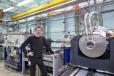
X-ray absorption spectroscopy (XAS) is a versatile tool for chemistry, biology, and materials science. By probing how x rays are absorbed from core electrons of atoms in a sample, the technique can reveal the local structure around selected atoms.


Radioisotopes are widely used in medicine, industry, and scientific research. New applications for radioisotopes are constantly being developed.

This COVIDSafe Plan describes the actions that ANSTO will take to keep our staff, contractors and visitors and platform users and collaborators safe and minimise the risk of the spread of COVID-19 infection.

Four annual awards in neutron scattering were announced at Australian Neutron Beam Users Group (ANBUG) and AINSE Neutron Scattering Symposium (AANSS) to individuals with strong links to ANSTO

The new facility will be built around a product line of ANSTO’s design – a new Technetium-99m generator – that will enable greater process automation than is possible with existing technology, leading to improvements in efficiency, quality and importantly the highest levels of production safety.

ANSTO researchers are investigating nuclear propulsion systems for applications on the sea and in space.

Archive of ANSTO research publications, seminars and short talks.

Publications and resources from the Powder Diffraction beamline.


The User Advisory Committee (UAC) are pleased to present this year's invited speakers.

Shaun Jenkinson is currently Chief Executive Officer of ANSTO.

Role at ANSTO

The Advanced Diffraction and Scattering beamlines (ADS-1 and ADS-2) are two independently operating, experimentally flexible beamlines that will use high-energy X-ray diffraction and imaging to characterise the structures of new materials and minerals.
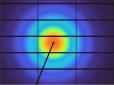
The Biological Small Angle X-ray Scattering beamline will be optimised for measuring small angle scattering of surfactants, nanoparticles, polymers, lipids, proteins and other biological macromolecules in solution. BioSAXS combines combine a state-of-the-art high-flux small angle scattering beamline with specialised in-line protein purification and preparation techniques for high-throughput protein analysis.
Publications by ANSTO's National Deuteration Facility.