Particle therapy update
ANSTO physicist will gain further experience in particle therapy technologies.


Showing 21 - 40 of 65 results
ANSTO physicist will gain further experience in particle therapy technologies.
Dr Linda Croton, a Research Fellow at Monash University, has been awarded the 2020 ANSTO Australian Synchrotron Stephen Wilkins Thesis medal for her outstanding work using synchrotron-based X-ray for brain imaging.
A study has provided insight into copper sulfate pentahydrate and could give clues to how other hydrated minerals change under the pressures within planetary environments
An ANSTO radiochemist has been awarded a scholarship to carry out research at the world-renowned Sloan Kettering Cancer Center in New York.

The project aims to engage the wider cultural heritage community in addition to our internal research.
Tool developed for producing F-18 radiopharmaceuticals for PET imaging.
Following a decade of imaging to support research and clinical trials at ANSTO and the University of Sydney’s Brain and Mind Centre at Camperdown, two PET scanners have been transferred to the University of Wollongong.
Using PET and simulations to verify the accuracy of dose and range in advanced therapy with heavy ions
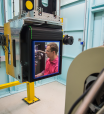
The High Performance Macromolecular Crystallography beamline will enable the study of very small (sub-5 micrometre) or weakly diffracting crystals, providing a state-of-the-art high-throughput facility for researchers. MX3 will be able to study the structures of large proteins and protein complexes for virology, drug design and industrial applications via goniometer mounted crystals, in-tray screening, or via serial crystallography methods.
The Australian Academy of Technology and Engineering (ATSE) has elected Professor Andrew Peele, Director of ANSTO’s Australian Synchrotron, to become a Fellow of the prestigious organisation.

Dr Anne Hellstedt has been appointed Director of ANSTO’s Innovation Precinct.

Research on lunar meteorite and moon crater analogues coincides with Science Week.
New high energy ion microprobe beamline supports space research on the effects of radiation on astronauts.
Useful in some mineral processes but a major problem in others, jarosite may be the key to unlocking the geological history and environmental context of water on Mars.