

Showing 2041 - 2060 of 2448 results
Association award
Neutron association award to energy materials researcher Prof Vanessa Peterson.
Declaration of the national radioactive waste management facility in South Australia is an important outcome for Australia
A site for the National Radioactive Waste Management Facility has been acquired, with the new facility to be built near the town of Kimba on the South Australian Eyre Peninsula.
Polarised Helium-3 Successfully Commissioned on 6 OPAL Instruments
VHM Ltd Pilot Hydromet Plant at ANSTO delivering favourable results for unlocking Australia’s critical rare earths
ANSTO shares specialist expertise
Hosts workshop on nuclear forensics for IAEA members.
Supply of nuclear medicine in the news
Lutetium-177 used for advanced prostate cancer
Scholarship ANSTO French Embassy (SAFE) Scholarship Program 2016
A step closer to Streptocococcus pneumoniae vaccine

Development of radiotracers
The Biosciences team undertakes the radiolabelling of chemical, biochemical. biological or material vector for the purpose of radiotracing in living systems.
Strategic relationship agreement with the Australian National University
ANSTO has signed a strategic agreement with the Australian National University and sets the relationship between the two organisations, who collaborate on important projects, such as the fusion energy project ITER and space research, well into the future.
Little forest legacy site
ANSTO is responsible for the Little Forest Legacy Site (LFLS) located within the ANSTO Buffer Zone boundary. This site, formerly known as the Little Forest Burial Ground (LFBG), was used by the Australian Atomic Energy Commission (AAEC) during the 1960’s to dispose of waste containing low levels of radioactivity and beryllium oxide (non-radioactive) in a series of shallow trenches. There has been regular monitoring of the site since 1966 and the results have been reported in ANSTO’s environmental monitoring reports.
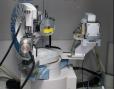
X-ray Reflectometer
This instrument can measure reflectivity at air-solid or air-liquid interfaces.
St Vincent's Institute research takes us a step closer to a more effective Streptococcus pneumoniae vaccine
Inaugural deaf youth science camp an “incredible opportunity”
ARPANSA Direction
Funding commitment for ANSTO's Innovation Precinct
ANSTO’s Innovation Precinct welcomes NSW Government’s $12.5 commitment funding.
Pilot project re-designs instrument cabin
The first pilot project at the Australian Synchrotron takes place following a Memorandum of Understanding between nandin and Swinburne University of Technology and Design Factory Melbourne (DFM).

Corrections to Annual Reports
ANSTO publishes amendments to annual reports on this page.
Instrumentation donated to synchrotron in Jordan
Senior electronics engineer from SESAME visits following donation of instrumentation to the Middle East's synchrotron in Jordan.