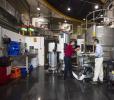
Working at ANSTO
ANSTO offers a diverse range of career opportunities within science, engineering, corporate services and trade disciplines.


Showing 221 - 240 of 302 results
ANSTO offers a diverse range of career opportunities within science, engineering, corporate services and trade disciplines.
ANSTO showcased its significant contribution to security, safety, and public health during a visit of the Director-General of the International Atomic Energy Agency (IAEA) Rafael Grossi, Minister for Industry and Science Ed Husic, Australian Ambassador to Austria Richard Sinclair and Ambassador for Arms Control and Counter-Proliferation Ian Biggs and other dignitaries at the weekend.
$80.2 million in new funding to expand the research capabilities of the Australian Synchrotron.
Development of new techniques makes it possible to date Australian Aboriginal rock art.
This joint initiative at ANSTO has developed a new capability: solid surface radiolabelling to evaluate Auger emitting sources for next-generation targeted therapy.
ANSTO facilitating coordinated effort to find the nexus that leads to chronic kidney disease of unknown origin
Scientists at ANSTO characterise structures with atomic detail using probes such as x-rays, electrons, neutrons and ions.
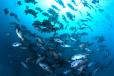
Stable isotopes are high useful in investigations of environmental samples.
ANSTO to receive a new grant to continue to fight chronic kidney disease killer in Sri Lanka.

ANSTO's OPAL reactor is one of the world's most advanced and reliable research reactors today. To ensure we can continue operating OPAL safely and reliably and maximise utilisation, ANSTO must regularly carry out maintenance and upgrades.
View the upcoming proposal deadlines for access to ANSTO’s Research Portal. The User Office provides support for research proposals and enables you to leverage our world-class research infrastructure and facilities.
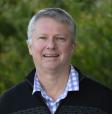
Winners of the Big Ideas Competition 2021
The Titan Krios cryo-electron microscope reveals the inner workings of life at the cellular level.
ANSTO has hosted its second IAEA Practical Introduction to Nuclear Forensics Regional Training Course for representatives of member countries from South-East Asia, sharing expertise on the theoretical and practical aspects of nuclear forensics to respond to incidents of nuclear or other radioactive material out of regulatory control.
Project Bright, the construction of eight new beamlines at ANSTO’s Australian Synchrotron has reached a milestone by achieving ‘First Light’ for the new micro-computed tomography (MCT) beamline in late NovembeR.