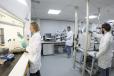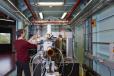
A little bit of the moon just landed at ANSTO
Research on lunar meteorite and moon crater analogues coincides with Science Week.
Showing 241 - 254 of 254 results
Research on lunar meteorite and moon crater analogues coincides with Science Week.
Radioisotopes are widely used in medicine, industry, and scientific research. New applications for radioisotopes are constantly being developed.
A new study by researchers from Curtin University using the infrared (IR) and X-ray fluorescence microscopy (XFM) beamlines at the Australian Synchrotron has provided a better understanding of the chemical and elemental composition of latent fingermarks.
Australian and Taiwanese scientists have discovered a new molecule which puts the science community one step closer to solving one of the barriers to development of cleaner, greener hydrogen fuel-cells as a viable power source for cars.
Publications by ANSTO's National Deuteration Facility.
A collaboration of scientists from RMIT, ANSTO and the CSIRO has published pioneering research that brings new insights into intrinsically disordered proteins and protein regions (IDPs)/ (IDRs) and how they behave under various physiological processes.
On average, there is now 17 per cent less rainfall across Western Australia’s south-western region than was recorded prior to 1970. This rainfall reduction has economic, social and environmental implications for the region, in particular for the growing capital of Perth, as well as water-dependent industries in the state.
Beamtime Guide on the X-ray Fluorescence Microscopy beamline at the Australian Synchrotron.
Archive of ANSTO research publications, seminars and short talks.
Publications and resources from the Powder Diffraction beamline.
The Infrared microspectroscopy microscopes can record spectra from a range of different samples; from thin microtomed sections to polished blocks and embedded particles. This section highlights the types of samples that can be analysed using the IRM beamline
Highlights of the Magnetism Project.