
ANSTO User Meeting 2021 - Awards
You are invited to submit to the various awards from ANSTO, User Advisory Committee (UAC) and Australian Neutron Beam User Group (ANBUG).


Showing 281 - 300 of 658 results
You are invited to submit to the various awards from ANSTO, User Advisory Committee (UAC) and Australian Neutron Beam User Group (ANBUG).
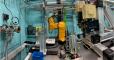
With enhanced submicron spatial resolution, speed and contrast, the Micro-Computed Tomography beamline opens a window on the micron-scale 3D structure of a wide range of samples relevant to many areas of science including life sciences, materials engineering, anthropology, palaeontology and geology. MCT will be able to undertake high-speed and high-throughput studies, as well as provide a range of phase-contrast imaging modalities.
Advanced imaging reveals unusual, unseen patterns in seabird feathers.
A collaborative group including Monash has produced an ultra-thin and ultra-flexible organic solar cell for advanced wearable devices.
Funding awarded for research on an additive manufacturing technique for use on rail infrastructure.
ANSTO research focuses on an advanced form of cancer treatment under consideration in Australia.
Radiocarbon dating capabilities at the Centre for Accelerator Science have provided evidence of a 17,300-year old painting of a kangaroo from the Kimberley region.
NSW grants bolster additive manufacturing and groundwater processing capabilities.


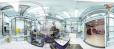
Technical information for the Powder Diffraction beamline at the Australian Synchrotron.
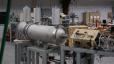
Micro-Particle Induced X-ray Emission (µPIXE) is used to construct elemental maps that show variations of an element's concentration across the sample surface.
Wolfgang Kubicki, MdB and a small delegation visited to see the Spatz neutron instrument donated by Helmholtz Zentrum Berlin (HZB) and discuss research.
La Trobe University researchers have used the Australian Synchrotron in a new study that reveals how crocodiles resist fatal fungal infections with a unique pH sensing mechanism despite living in filthy water.
ANSTO researchers investigate the behavior of materials in extreme environments, to analyse and predict how they will behave under adverse conditions.
On the international stage amongst the leading nuclear nations of the world, Australians hold its own. This status has been earned by ANSTO’s seventy-year history of safe nuclear operations, the application of nuclear science and technology to benefit society and nuclear stewardship role in Australia.
The 3D structure of a fungal and plant enzyme solves 50-year-old mystery.