Search hero banner

Search results

Showing 341 - 360 of 1644 results

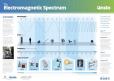
A poster which shows different wave types on the electromagnetic spectrum.

Electromagnetic spectrum

This poster shows how ANSTO utilises different parts of the electromagnetic spectrum for environmental and medical research.

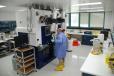
Radioisotopes lab

Radioisotopes

Using the OPAL multipurpose reactor,, ANSTO can provide a diverse suite of radioisotopes for research and applications

Animal care and ethics

Animal care and ethics

ANSTO as a leading science research organization in Australia is committed to the ethical, humane and responsible care of animals used for scientific purposes.

Particle Therapy

Particle Therapy

ANSTO is supporting the introduction of particle therapy, an advanced form of radiation treatment for difficult-to-treat cancers, in Australia

OPAL-education-hero-image

What is nuclear science?

Nuclear science is crucial to understanding our universe, our world and ourselves at the atomic level. If we can understand how atoms get together, interact, or can be best combined with other atoms, new, more efficient materials and drugs can be developed.

FNCA Meeting

Combining resources and expertise to address climate change in the Asia-Pacific

Progress in PNG

PNG Fisheries expresses great satisfaction with the progress of aquaculture initiative.

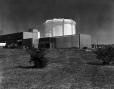
hifar-history-web

Our History

In April 15, 1953, Australia entered the nuclear science arena, when the Atomic Energy Act came into effect. The Australian Atomic Energy Commission (AAEC) followed and in 1987 the AAEC evolved into the Australian Nuclear Science and Technology Organisation (ANSTO) as it’s known today.

Soft x-ray spectroscopy

Soft x-ray spectroscopy

Soft x-rays are generally understood to be x-rays in the energy range 100-3,000 eV. They have insufficient energy to penetrate the beryllium window of a hard x-ray beamline but have energies higher than that of extreme ultraviolet light.

Scientific Computing

Scientific Computing

The Scientific Computing team supports researchers by performing numerical simulations that complement experimental research. In particular, we use state-of-the-art software to perform computational quantum mechanical modelling, molecular dynamics simulations, lattice dynamics calculation, data analysis and visualisations.

Pagination