

Showing 541 - 560 of 1507 results

Oil and Gas Decommissioning
With more than 50 years of experience in monitoring natural and anthropogenic radionuclides in the environment, ANSTO can provide the crucial data and insights you need to assist with the planning and risk management associated with oil and gas decommissioning.
Multipurpose research reactor providing radiopharmaceutical
Radioactive phosphorous for implantable medical device to treat pancreatic cancer in global clinical trial
Internships provide valuable hands-on experience for young international researchers
Insights on Alzheimer’s disease
Combined imaging approach characterises plaques associated with disease.
Using marine fossils, a large international collaboration decodes a fundamental process in Earth's history
ANSTO has contributed to a large international study which decodes a fundamental process in Earth’s history and provides guidelines regarding the types of research questions that palaeontologists can investigate using marine fossils.

Chromium - 51
Reconstructing the history of the Australian landscape
Million year lag time in transport of sediment in Murray Darling River Basin system.
Elusive class of compounds found
Neutron scattering has contributed to a 'tour de force' of chemistry led by Monash University.

Privacy Policy
Australian Nuclear Science and Technology Organisation (ANSTO) is committed to protecting your personal information in accordance with the Privacy Act 1988 (Cth) (Privacy Act) and the Australian Privacy Principles.
Indium - 111In DTPA Injection
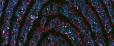
Fingermark forensics
Most fingermark research has largely focussed on the organic material in residues. Consequently, a gap in fundamental knowledge exists when it comes to inorganic components such as metals.
Enhancing the science of rivets earns researcher early career award
Dr Rezwanul Haque, now a senior lecturer at the University of the Sunshine Coast, received a national Young Scientist Award for his earlier research using nuclear techniques at ANSTO’s Australian Centre for Neutron Scattering to find cracks and signs of stress in riveted joints in sheet metal in car bodies.
What is Indigenous Cultural Intellectual Property: An explainer
indigenous Cultural Intellectual Property is a broader way of talking about First Peoples’ rights to their cultural heritage, traditional knowledge and cultural expressions.
Australian Synchrotron VCE Lab Session – Additional Instructions
Molecular scaffold
Experiments at the Synchrotron enable researchers to produce a 3D structure of a molecular scaffold with role in cancer
3D structure of a molecular scaffold determined
Melbourne researchers have used the Australian Synchrotron to produce structure of molecule known to play a critical role in the development and spread of aggressive cancer.
Sharing groundwater expertise
ANSTO expertise provides much-needed information about groundwater resources in the Mozambique capital and district.
Funding supports biomedical research
ANSTO part of consortium funded by Federal Government to develop new radioimmunological drugs.