Project BRIGHT
The BRIGHT Project will expand the beamline infrastructure of the Australian Synchrotron to increase both its capacity and capabilities.


Showing 61 - 80 of 143 results
The BRIGHT Project will expand the beamline infrastructure of the Australian Synchrotron to increase both its capacity and capabilities.
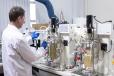
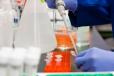
Biodeuteration involves the growth of microorganisms in a heavy water (deuterium oxide) culture medium supplemented with either a deuterated or hydrogenated carbon substrate, depending on the level of deuteration required. The biomass is harvested and the deuterated molecule (e.g. protein) is purified and characterised.

Explore ANSTO's range of publications and reports available for the public.

ANSTO User Meeting 2021 - Speakers
ANSTO’s user office in Melbourne offers access to the Australian Synchrotron, a world-class research facility with over 4,000 user visits per year. ANSTO seeks collaboration and partnerships with research organisations, scientific users and commercial users.
Research undertaken to understand ancient record of algal blooms

Links to all previous news and case studies published by the National Deuteration Facility
Professor Peter Lay from the University of Sydney has been awarded the Australian Synchrotron Lifetime Contribution Award by ANSTO, the Australian Nuclear Science and Technology Organisation.
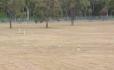
ANSTO is responsible for the Little Forest Legacy Site (LFLS) located within the ANSTO Buffer Zone boundary. This site, formerly known as the Little Forest Burial Ground (LFBG), was used by the Australian Atomic Energy Commission (AAEC) during the 1960’s to dispose of waste containing low levels of radioactivity and beryllium oxide (non-radioactive) in a series of shallow trenches. There has been regular monitoring of the site since 1966 and the results have been reported in ANSTO’s environmental monitoring reports.
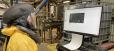
ANSTO has a full suite of mineralogical, chemical and hydrometallurgical facilities from laboratory through to pilot scale.
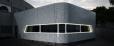
The Advanced Diffraction and Scattering beamlines (ADS-1 and ADS-2) are two independently operating, experimentally flexible beamlines that will use high-energy X-ray diffraction and imaging to characterise the structures of new materials and minerals.

Following your experiment at the Australian Synchrotron there are certain tasks that users can complete including a user feedback survey and claiming reimbursement for travel expenses.