

Showing 61 - 80 of 104 results

Elements of the 21st Century 2026
Do you love science? Here is a competition for you that combines chemistry and creativity! Discover the world of elements and create a poster for your favourite element!
Fusion research in Australia
Australia part of global renaissance in fusion power research symbolised by ITER experiment
Our understanding of the atom powers ANSTO's nuclear and accelerator research techniques
Scientists at ANSTO characterise structures with atomic detail using probes such as x-rays, electrons, neutrons and ions.
Simulating phase transformations during the welding of ferritic steels
French International Scholarship Exchange
Star power reached in nuclear fusion
Australian scientists from ANTSO have congratulated their British colleagues for a major advance in their quest to develop practical nuclear fusion.
Monash scientist earns Stephen Wilkins PhD Thesis Medal for innovative brain imaging
Dr Linda Croton, a Research Fellow at Monash University, has been awarded the 2020 ANSTO Australian Synchrotron Stephen Wilkins Thesis medal for her outstanding work using synchrotron-based X-ray for brain imaging.
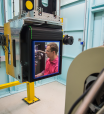
High Performance Macromolecular Crystallography Beamline (MX3)
The High Performance Macromolecular Crystallography beamline will enable the study of very small (sub-5 micrometre) or weakly diffracting crystals, providing a state-of-the-art high-throughput facility for researchers. MX3 will be able to study the structures of large proteins and protein complexes for virology, drug design and industrial applications via goniometer mounted crystals, in-tray screening, or via serial crystallography methods.
Historic pewter plate reveals secrets
Technique provides insights into historic maritime artefact linked to early exploration of Australia.
Leading fine particle pollution monitoring reaches 30yr milestone & looks to the future
ANSTO commenced an aerosol sampling program thirty years ago this week to characterise these pollutants and ultimately, identify their sources, which has taken it to the forefront of environmental monitoring of this type in Australia and the region.
New partnership and nuclear techniques to aid cancer research
Talking nuclear fusion
Dr Richard Garrett featured on an ABC National program that highlighted how far we are from a future with nuclear fusion energy. Image: Jamison Daniel, Oak Ridge Leadership Computing Facility
Australian Synchrotron MX2 Upgrade
Bushfire charcoal particles carried an unprecedented distance
Charcoal particles from recent bushfires in NSW were carried 50 kilometres by the wind, which has significance for fire history reconstruction.
Tracing the impact of toxic metals
Two ANSTO environmental scientists are part of a large team led by the Australian National University (ANU), who have received an Australian Research Council Discovery Project grant to investigate how environmental change and human activities since industrialisation have impacted the transport and deposition of toxic metals on the south coast of Australia, Tasmania, and remote Southern Ocean islands.
Data Analysis
Below lists some useful programs for data reduction, search matching, analysis and structure visualisation of diffraction data.

Australian access to overseas synchrotrons
The International Synchrotron Access Program (ISAP) is administered by the Australian Synchrotron and is designed to assist Australian-based synchrotron users to access overseas synchrotron related facilities.

Nanoprobe beamline (NANO) - under construction
The BRIGHT Nanoprobe beamline provides a unique facility capable of spectroscopic and full-field imaging. NANO will undertake high-resolution elemental mapping and ptychographic coherent diffraction imaging. Elemental mapping and XANES studies (after DCM upgrade) will be possible at sub-100 nm resolution, with structural features able to be studied down to 15 nm using ptychography.
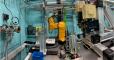
Micro-Computed Tomography beamline (MCT)
With enhanced submicron spatial resolution, speed and contrast, the Micro-Computed Tomography beamline opens a window on the micron-scale 3D structure of a wide range of samples relevant to many areas of science including life sciences, materials engineering, anthropology, palaeontology and geology. MCT will be able to undertake high-speed and high-throughput studies, as well as provide a range of phase-contrast imaging modalities.