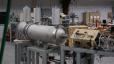
Micro-Particle Induced X-ray Emission
Micro-Particle Induced X-ray Emission (µPIXE) is used to construct elemental maps that show variations of an element's concentration across the sample surface.


Showing 601 - 620 of 1508 results
Micro-Particle Induced X-ray Emission (µPIXE) is used to construct elemental maps that show variations of an element's concentration across the sample surface.
Dr Anne Hellstedt has been appointed Director of ANSTO’s Innovation Precinct.
The Chair of ANSTO, The Hon Dr Annabelle Bennett, AC SC, announced today that Mr Shaun Jenkinson has been reappointed as the Chief Executive Officer of ANSTO.
On average, there is now 17 per cent less rainfall across Western Australia’s south-western region than was recorded prior to 1970. This rainfall reduction has economic, social and environmental implications for the region, in particular for the growing capital of Perth, as well as water-dependent industries in the state.

ANSTO is engaged in international partnerships in the peaceful uses of nuclear science and technology throughout the world.
Dharawal educator Fran Bodkin has spent a good part of her eighty plus years, studying or sharing information about the therapeutic and nutritional properties of traditional indigenous plants and wildlife.
ANSTO is participating in a new Australian Research Council (ARC) Centre of Excellence for Indigenous and Environmental Histories and Futures (CIEHF) to be headquartered at James Cook University (JCU) that aims to bring Indigenous and environmental histories to the forefront of land and sea management.
An international research team has discovered how a bacterial toxin, known as Ssp, is capable of entering and killing a wide range of living cells, including human cells using the Australian Synchrotron.

ANSTO is coordinating and facilitating the calling of pre-concept papers for the next cycle of technical cooperative project proposals under the Regional Cooperative Agreement for Research, Development and Training Related to Nuclear Science and Technology for Asia and the Pacific (RCA) | IAEA
ANSTO, Australia’s knowledge centre for nuclear science and technology, connects STEM graduates with industry to work on real-world challenges through its FutureNow Scholarships for 2022.

Sarah is a dedicated science communicator with a strong background in education.
ANSTO contributes to major study on global warming by measuring methane and carbon monoxide trapped in ice.

ANSTO has contributed to international research on quasicrystals that opens the door to tailored magnetic materials.
A radiation sensor designed and built by Western Australian high school students has been tested on an ANSTO ion beam, ahead of its trip to the International Space Station later this year. The Binary Space Program is a research group at Curtin University that, in 2021, designed, built and flew Western Australia's very first homegrown satellite, Binar.
Singapore researchers publish findings of link between proteins of archaea and eukaryotes despite being separated by more than 2 billion years of evolution.