Multipurpose research reactor providing radiopharmaceutical
Radioactive phosphorous for implantable medical device to treat pancreatic cancer in global clinical trial


Showing 81 - 100 of 376 results
Radioactive phosphorous for implantable medical device to treat pancreatic cancer in global clinical trial
The Australian led regional cancer care project in medical physics held its first regional training course in Malaysia to progress Rays of Hope.
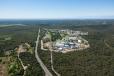
In January 2026, Mr Michael Quigley AM, ANSTO Board Chair, shared ANSTO's Statement of Intent with the Minister for Industry and Innovation, and Minister for Science.
ANSTO to receive a new grant to continue to fight chronic kidney disease killer in Sri Lanka.

In partnership with the Australian Museum as part of National Science Week explore the 2020 hackathon theme of Deep Blue: Innovation for the future of our oceans
ANSTO shared expertise on next-generation reactors and nuclear power with sustainable energy experts at the Australian Academy of Science symposium in May.

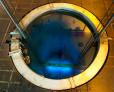
ANSTO operates a range of cobalt-60 gamma irradiators, providing the Australian community with a range of irradiation services for medical, health, industry, agriculture and research purposes.
The role of trace elements as palaeoclimate proxies has been explored in ANSTO-led collaborative environmental research.
Accurate ‘fingerprinting’ tool to verify source of origin is in development with collaborators from academia and industry.
Meeting of minds about potential next-generation cancer treatment for Australians

On behalf of ANSTO thank you for your interest in our tours. We hope your visit to ANSTO will be both enjoyable and informative.
State- of-the-art microdosimeters used in research

Molten Salt Reactors (MSRs) are nuclear reactors that use a fluid fuel in the form of very hot fluoride or chloride salt rather than the solid fuel used in most reactors. Since the fuel salt is liquid, it can be both the fuel to produce heat and the coolant to transport the heat to a power plant.
The Japanese experience with leading-edge radiation treatment for cancer shows tremndous success
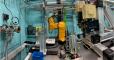
With enhanced submicron spatial resolution, speed and contrast, the Micro-Computed Tomography beamline opens a window on the micron-scale 3D structure of a wide range of samples relevant to many areas of science including life sciences, materials engineering, anthropology, palaeontology and geology. MCT will be able to undertake high-speed and high-throughput studies, as well as provide a range of phase-contrast imaging modalities.

ANSTO's Mo-99 manufacturing facility secures Australia’s ability to produce Mo-99 to meet current and future domestic demand and provide a significant proportion to support global demand.
Following a decade of imaging to support research and clinical trials at ANSTO and the University of Sydney’s Brain and Mind Centre at Camperdown, two PET scanners have been transferred to the University of Wollongong.