Seafood authenticity research moves into new stage
Accurate ‘fingerprinting’ tool to verify source of origin is in development with collaborators from academia and industry.


Showing 101 - 120 of 337 results
Accurate ‘fingerprinting’ tool to verify source of origin is in development with collaborators from academia and industry.
Study explored how key proteins manage dietary cholesterol absorption and elucidated crucial transport mechanisms that contribute to cholesterol balance in the body.
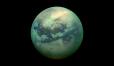
Welcome to the home of Planetary Materials research at ANSTO.
Nuclear security experts and officials from Australia’s nuclear agencies have convened at the International Atomic Energy Agency’s (IAEA) headquarters in Vienna, Austria last week for the International Conference on Nuclear Security (ICONS).

Materials researcher with a passion for chemistry, Matthew Teusner is investigating lithium sulfur materials to support the next step in cleaner battery power.
The mining industry is set to benefit from a new Australian capability that uses a nuclear scanning technique to detect the presence of precious metals and strategic minerals in a core sample.
Dr Ceri Brenner appointed new leader of the Centre for Accelerator Science

Consultant appointed to consider a variety of financial, manufacture and import options.
Australia’s new Mo-99 manufacturing facility reaches practical completion
Sharing ANSTO education expertise in nuclear with international secondary school teachers in IAEA training.

On the 10th of October 2025, the Minister for Industry, Science and Technology provided his Statement of Expectations to ANSTO.
Since 1962, the United Uranium Scholarship has helped promising young scientists in the field of nuclear energy extend their knowledge and expertise. In 2022, scholarships were awarded to several ANSTO researchers, including Phil Sutton.
Australian-first detector to accelerate cancer research unveiled.
ANSTO renewed its Memorandum of Understanding (MOU) with the Japan Proton Accelerator Research Complex (J-PARC) operated by the High Energy Accelerator Research Organisation (KEK) and Japan Atomic Energy Agency (JAEA). Now broadened to include their partner Comprehensive Research Organization for Science and Society (CROSS), the signing took place early in the year and a celebratory workshop was held late July.
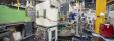
Kowari, a residual stress diffractometer, can be used for ‘strain scanning’ of large engineering components as large as 1000 kilograms.
Environmental Scientist Amy Macintosh is researching the impact of the petroleum industry on Australian marine life.