Facilities for the future
Government response to 2016 National Research Infrastructure Roadmap


Showing 1121 - 1140 of 1371 results
Government response to 2016 National Research Infrastructure Roadmap
Three ANSTO staff members were involved in a chemical spill this morning when approx 250mL of sodium hydroxide was released from a pipe.


Applications are currently open for the 2024 Scholarship AINSE ANSTO French Embassies (SAAFE) Research Internship Program. The SAAFE Program supports early career researchers at PhD and Postdoctoral level to expand research and innovation activities within Human Health, the Environment and the Nuclear Fuel Cycle, to initiate sustainable research networks and linkages to support Australia, New Zealand and France research and innovation.
Routine transport of spent nuclear fuel
ANSTO completed an international overnight dash for nuclear medicine earlier this week, chartering three planes to get potentially life-saving children’s cancer treatments from Japan to hospitals across Australia.
Mathematical insights explain inconsistencies in experimental data: pyrochlore transformation into defect fluorite or not?
With the screening of the popular HBO series about Chernobyl, we asked our Nuclear Analysis team for their insights on key differences between the reactor in the TV series, a Generation II RBMK power reactor and ANSTO’s state of the art research reactor OPAL.

The Australian Synchrotron has an on-site Guesthouse for users and AS guests.

Our research group carries out fundamental research uniquely applied to industrial problems in the areas of uranium, rare earth and lithium processing.
Proposals to Australian Centre for Neutron Scattering and National Deuteration Facility closed
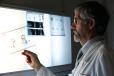
Osteoporosis is a major public health issue, and it has been estimated that total annual cost of osteoporosis/osteopenia in Australia is around $2,754 million.
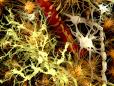
This program uses ANSTO’s nuclear capabilities to identify, quantify, and monitor the mechanisms which cause, or influence the development and progression of chronic diseases.
ANSTO is a unique national science organisation that began operating under its predecessor The Australian Atomic Energy Commission (AAEC) 70 years ago.
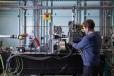
Data analysis on the X-ray fluorescence microscopy beamline at the Australian Synchrotron.
On behalf of Australia, ANSTO, the only nuclear reactor facility in Australia, supports the International Atomic Energy Agency (IAEA) to undertake its role in facilitating national, regional, and international efforts to enhance nuclear security, including measures to protect against nuclear terrorism.
Insights about Mayan Empire relevant for current climate challenges

Koala is one of the leading small-molecule crystallography instruments in the world for determining the complex crystal structure of a wide range of chemicals and minerals.