Improving rail transport
Funding awarded for research on an additive manufacturing technique for use on rail infrastructure.


Showing 1141 - 1160 of 2201 results
Funding awarded for research on an additive manufacturing technique for use on rail infrastructure.
The University of Newcastle and UNSW [GW1] are using advanced neutron scattering techniques at ANSTO to carry out research on the structure of polymers in complex salt environments that will ultimately provide a way to predict their behaviour for real-world applications.
Australian Centre for Neutron Scattering succcess at 2017 awards
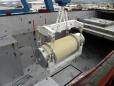
A sparrow with 257 parts weighing more than 29 tonnes arrives safely at ANSTO
Two startups supported by the nandin Innovation Centre at ANSTO have hit the ground running in 2021 securing major opportunities from state governments to see their businesses thrive.

The Public Interest Disclosure Act 2013 aims to promote integrity and accountability in the Australian Public Sector by encouraging the disclosure of information about actual or suspected wrongdoing, protecting people who make disclosures and ensuring that disclosures are properly investigated and dealt with.
The Waste Management Services group at ANSTO is now using a new automated storage and retrieval system (ASRS) that will enhance safety, access and efficiency.
Environmental scientists at ANSTO have been undertaking research to gain a better understanding of the potential impact of contaminants on decommissioned offshore oil and gas infrastructure since 2017

New research published a team from the Imperial College London, University of Glasgow and ANSTO suggests that rock coasts, which make up over half the world’s coastlines, could retreat more rapidly in the future due to accelerating sea level rise.

The Australian Industry Becquerel Traceability Program (AIBTP) provides facilities with direct measurement traceability to the Australian standard for the activity of radionuclides used in Positron Emission Tomography (PET).
ANSTO waste management services meet regulatory requirements and international best practice standards.
New cathode material provides a direction for the design of high performing sodium ion batteries for large scale energy storage
Environmental scientists at ANSTO will contribute to major Antarctic research project in Antarctica funded by the Australian Research Council.
Combining resources and expertise to address climate change in the Asia-Pacific
Nuclear techniques used in investigation of a new class of micro and nanoscale zinc fertilisers.
ANSTO to ensure ultra-low radiation environment in newly-funded Stawell Underground Physics Laboratory.
The need for a smaller, more transportable version of ANSTO’s 1500-litre atmospheric radon-222 monitor, and with a calibration traceable to the International System of Units, prompted the team to develop a 200-litre radon monitor that would meet those needs.