
Specialist Hydrometallurgist
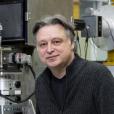
John Lawson is a Specialist Hydrometallurgist working with the ANSTO Minerals business unit.


Showing 1181 - 1200 of 1253 results
John Lawson is a Specialist Hydrometallurgist working with the ANSTO Minerals business unit.

Publications, posters and conference presentations for fire impacts reconstructed from a southwest Australian stalagmite.
Technology at heart of award-winning wastewater innovation from BioGill.
Moving earth in the search for dark matter: laboratory construction underway at mine site.
A unique scientific capability comprising a single research platform for high-fidelity simulation, real-time dosimetry, and biological response data is available all from a neutron instrument.
ANSTO showcased its significant contribution to security, safety, and public health during a visit of the Director-General of the International Atomic Energy Agency (IAEA) Rafael Grossi, Minister for Industry and Science Ed Husic, Australian Ambassador to Austria Richard Sinclair and Ambassador for Arms Control and Counter-Proliferation Ian Biggs and other dignitaries at the weekend.
ANSTO scientists will contribute to a new $1 million ARC Linkage Project grant to evaluate human responses to post glacial sea level rise at Red Lily, Arnhem land led by Griffith University.

Technical information on the Far Infrared beamline at the Australian Synchrotron.
Australian clean energy technology company, entX Limited is taking advantage of ANSTO’s unique capacity to generate tailored radioisotope products in the OPAL multi-purpose nuclear reactor to advance a series of innovative projects.
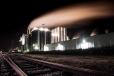
Nuclear-based energy generation systems not only provide comparatively low-cost, low-carbon emission electricity but also provide substantial amounts of process heat.

ANSTO User Meeting 2021 - Speakers

Infastructure used on the Energy Materials Project.
Hear from our most recent addition to the nandin Innovation Centre, Tomonori Hu, Founder and CEO of Miriad.
ANSTO environmental scientists contribute to investigation of carbon capture in wetlands.
Research investigates traditional Indigenous Australian burning techniques in managing landscape and reducing fuel loads.