
Board member
Dr Storr has worked for over 40 years in nuclear science and technology in a range of positions spanning operations, research and executive management.


Showing 1461 - 1480 of 1643 results
Dr Storr has worked for over 40 years in nuclear science and technology in a range of positions spanning operations, research and executive management.

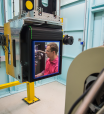
The High Performance Macromolecular Crystallography beamline will enable the study of very small (sub-5 micrometre) or weakly diffracting crystals, providing a state-of-the-art high-throughput facility for researchers. MX3 will be able to study the structures of large proteins and protein complexes for virology, drug design and industrial applications via goniometer mounted crystals, in-tray screening, or via serial crystallography methods.

Geetanjali helps maintain the laboratories and provides technical support to researchers.
Early research at ANSTO has contributed to development of innovative submicron particle encapsulation technology.
Imaging protocol assesses molecular mechanism of work in the treatment of deadly childhood cancer neuroblastoma.
A revised model has been developed that can more accurately predict the actual service life of an industrial component.
ANSTO has hosted for the third time the International Atomic Energy Agency’s (IAEA) Practical Introduction to Nuclear Forensics Regional Training Course.
Over the past 70 years ANSTO has been building Australia’s nuclear expertise and despite being small in scale, today we are complex and sophisticated nuclear nation.
Neutron scattering helps clarify the arrangement of magnetic vortices, skyrmions, in material
Radiocarbon analyses on corals from two sites in Australian waters of the southwest (SW) Pacific has indicated significant changes in ocean circulation in the Pacific and large climate variability during the early to mid-Holocene period (8,000-5,400 years ago).
ITRAX has now analysed more than a kilometre of cores since it became operational in 2012.
Understanding of micro-structure gained using X-ray scattering and spectroscopy.
New class of single atoms catalysts for carbon nanotubes characterised.