New species of rare 100-million years old flying reptile found in Australia
An international team of academic researchers led by Curtin University have provided a description of a new species of pterosaur, a flying reptile.


Showing 1481 - 1500 of 1508 results
An international team of academic researchers led by Curtin University have provided a description of a new species of pterosaur, a flying reptile.
Collaborative research predicted the distortion and performance of metal parts made by laser deposition.

Role at ANSTO
Dr Richard Mole is an instrument scientist co-responsible for the cold-neutron time-of-flight spectrometer PELICAN.

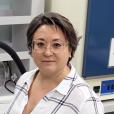
Dr Inna Karatchevtseva undertakes work at ANSTO in two main areas: defence industry research and fundamental materials research.
ANSTO has released the Independent Safety Review of Building 23 - Nuclear medicine production facility.
Sri Lankan students took part in an innovative hackathon to develop novel solutions to a wastewater runoff problem from reverse osmosis water treatment plants.
Research reports for the first time how solid methane and nitrogen expand in response to temperature changes and resolves an historic ambiguity relating to the structure of nitrogen.
The nuclear medicine community has welcomed the Australian Government’s decision to provide $30 million in funding to ANSTO for the design of a new nuclear medicine manufacturing facility.
Paper on redefinition of the kilogram receives international award

Recognition of research that developed a life-saving pharmaceutical milkshake using synchrotron techniques.
High intensity X-ray beam provides insights into the activity of natural killer cells.

On behalf of ANSTO thank you for your interest in our tours. We hope your visit to ANSTO will be both enjoyable and informative.

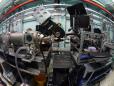
Technical information on the SAXS / WAXS beamline at the Australian Synchrotron.
ANSTO will make an application to the independent nuclear regulator, ARPANSA, to vary its license for its Interim Waste Store. The original operating license was approved in 2015, enabling the facility to hold what is called a TN-81 cask of intermediate-level radioactive waste that was safely repatriated from France in 2015.
The nuclear analysis team at ANSTO recently had a significant role in the re-design and optimisation of a cold neutron source facility for the reactor, its installation and the subsequent restart after a six-month shutdown.