

Showing 161 - 180 of 210 results
Nuclear tech helps power Perseverance Rover on Mars
A large international research team led by Academia Sinica in Taiwan investigated how heat is transferred in an advanced thermoelectric material made with germanium (Ge) and tellurium (Te) and doped with antimony (Sb). These devices are used to power space probes such as the Mars Curiosity Rover.
Netflix series 'Radioactive Emergency' reviewed by ARPANSA and ANSTO radiation experts
Blake Orr from ARPANSA review the Netflix series Radioactive Emergency.
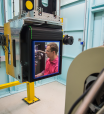
High Performance Macromolecular Crystallography Beamline (MX3)
The High Performance Macromolecular Crystallography beamline will enable the study of very small (sub-5 micrometre) or weakly diffracting crystals, providing a state-of-the-art high-throughput facility for researchers. MX3 will be able to study the structures of large proteins and protein complexes for virology, drug design and industrial applications via goniometer mounted crystals, in-tray screening, or via serial crystallography methods.
FAQs - Macromolecular Crystallography
Frequently Asked Questions on the Macromolecular Crystallography beamlines (MX1 and MX2)

Chief Information and Digital Officer
Marianne has been at ANSTO since August 2018 and has overseen the Information Digital Services (IDS) group during this time.
Understanding radiation damage at the atomic scale
ANSTO joins global network supporting innovation
ANSTO is expanding its global connections, with the nandin Innovation Centre joining an international network created to increase cross industry collaboration and co-creation.
Investigating a prospective light-weight fire retardant material with superior properties
Scientists from UNSW and ANSTO have characterised the structure of two-dimensional transition metal carbides, carbonites, and nitrides (MXenes) materials, that could be used as a lightweight fire-retardant filler and in energy storage devices.

Group Manager - Spectroscopy
Dr Peter Kappen manages the Spectroscopy Group at the Australian Synchrotron.

Radioactive Waste Management Specialist
Laura Maynard is a Radioactive Waste Management Specialist working in ANSTO’s Nuclear Waste Solutions division.
70 years of scientific excellence has brought significant benefits to Australia
ANSTO is a unique national science organisation that began operating under its predecessor The Australian Atomic Energy Commission (AAEC) 70 years ago.
Agreement with J-PARC opens neutron scattering conference

Next-gen wearable electronic devices
Ultra-flexible electronics has many potential applications within areas such as for example the military, healthcare and energy.
Leadership changes at ANSTO
This afternoon, the Chair of ANSTO, Dr Annabelle Bennett, wrote to all staff to let them know that CEO Dr Adi Paterson has decided to resign. She said the Board is deeply appreciative of the contributions Adi has made, including to the health, research and academic outputs of ANSTO during his tenure. Mr Shaun Jenkinson will continue as Acting CEO, while the Board undertakes a global search for a permanent CEO.

Energy use and emissions
Detailed data on ANSTO electricity use and CO2 emissions for FY2024 - FY2025
You are what you eat
Cracking the code for crop nutrition and food quality with X-ray fluorescence microscopy.

Corporate Publications
Explore ANSTO's range of publications and reports available for the public.
Expertise in characterising materials for lithium ion batteries
Pioneering work on materials for energy production, such as lithium ion batteries, has made ANSTO a centre of specialist capabilities and expertise.
Deuteration supports blood test to help diagnose breast cancer
The National Deuteration Facility has supplied deuterium labelled lipids to quantify lipid biomarkers in a blood test to help diagnose breast cancer.