Establishing global connections on quality seafood production and authenticty
ANSTO shares expertise on food authenticity research using nuclear techniques with Southeast Asia stakeholders.


Showing 421 - 440 of 973 results
ANSTO shares expertise on food authenticity research using nuclear techniques with Southeast Asia stakeholders.
A team of researchers including the University of Rochester, CSIRO and ANSTO has found methane emissions from human fossil sources have been greatly underestimated.
A new study by researchers from Curtin University using the infrared (IR) and X-ray fluorescence microscopy (XFM) beamlines at the Australian Synchrotron has provided a better understanding of the chemical and elemental composition of latent fingermarks.
Research confirms heating can increase strength of a type of hydrogel.
A long-standing collaboration led biomedical researchers from the University of Sydney has recently achieved success with the recent announcement of an innovative bone implant that significantly reduces rejection and inflammation.

Amelia Iverson is a Community Facilitator with the new VH2 Hydrogen Hub at Swinburne.
Soft X-ray experiments used to characterise new thin film topological Dirac Semimetal.
Excellent radiolabelling facilities and the operation of OPAL, a world-class multi-purpose nuclear reactor, enable ANSTO to produce a large range of radioisotopes for Australian researchers in both radiopharmaceutical and environmental areas.
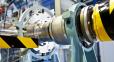
Elastic Recoil Detection Analysis (ERDA) is used principally as a method for measuring hydrogen in thin layers, and in the near-surface region of materials.
A unique scientific capability comprising a single research platform for high-fidelity simulation, real-time dosimetry, and biological response data is available all from a neutron instrument.
General manager ANSTO Communications and Stakeholder Engagement was one of the presenters at the IAEA W4NSEC workshop
ANSTO commenced an aerosol sampling program thirty years ago this week to characterise these pollutants and ultimately, identify their sources, which has taken it to the forefront of environmental monitoring of this type in Australia and the region.
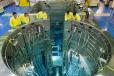
Nuclear science is applied by ANSTO's scientists in many areas that are vital to Australia's future, including agriculture, industry and manufacturing, minerals construction, health and environment. Our work in the development and applications and new knowledge and skills arises from world-class experience in nuclear science and technologies.

Aaron is the International Research and Development Projects Coordinator at DesignFactory Melbourne, and currently delivers DFM’s global programs with the Centre fo rDesign Research at Stanford University, the SUGAR Network for Global Innovation and Ide
Peter Kabokov will continue work that will contribute to defence industry
Advances in radon measurement technology by ANSTO researchers over the past decade have enabled the improved characterisation of the composition of pristine air masses that reach Antarctica.
Two approaches use existing low cost and low energy technologies to reuse stockpiled waste from mining operations - capturing carbon dioxide in the form of valuable carbonate minerals.
Using neutron imaging techniques at ANSTO, researchers from Macquarie University have gained a better understanding of how corrosion forms and spreads through concrete that is commonly used in sewer pipes.