Capabilities
ANSTO provides access to specialised facilities and capabilities by application. Please ensure that you contact the relevant ANSTO scientist for advice before submitting a proposal.


Showing 441 - 460 of 803 results
ANSTO provides access to specialised facilities and capabilities by application. Please ensure that you contact the relevant ANSTO scientist for advice before submitting a proposal.

ANSTO is engaged in international partnerships in the peaceful uses of nuclear science and technology throughout the world.
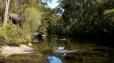
ANSTO undertakes research on Australia's water resources to inform more sustainable water management practices.
ANSTO to receive a new grant to continue to fight chronic kidney disease killer in Sri Lanka.
MABI instrument can determine both the concentration and source of black carbon pollution in the atmosphere.

ANSTO's procurement policy is closely aligned with the Commonwealth Procurement Guidelines and makes use of the Australian National Audit Office guidelines on ethics, accountability and transparency.
Young researcher accepted into the Australian Antarctic Science Program.

ANSTO maintains national capabilities in radionuclide metrology, the measurement and detection of ionising radiation, radioanalytical chemistry and nuclear forensics to support industry, government and scientific users.
Research undertaken to understand ancient record of algal blooms
ANSTO shared plans for an Innovation Precinct in southern Sydney at a breakfast event.
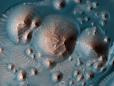
ANSTO provides a range of capabilities using neutrons, X-rays and infrared radiation to study the solids, liquids and gases that might be found in materials in our solar system and beyond.
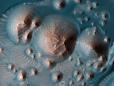
ANSTO provides a range of capabilities using neutrons, X-rays and infrared radiation to study the solids, liquids and gases that might be found in materials in our solar system and beyond.
nandin member, SVSR, report on their proof-of-concept for a reusable Graphene Oxide (GO) membrane to capture waste water vapours from ageing sewerage systems.

Best and brightest recognised in 2017 research awards