Fish lift
A lift for fish at Tallowa Dam: Study on dietary impacts.


Showing 681 - 700 of 1171 results
A lift for fish at Tallowa Dam: Study on dietary impacts.
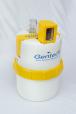
ANSTO’s nuclear medicine processing and distribution facility assembles, loads, tests and distributes a range of nuclear medicine products, including Mo-99. The Mo-99 is dispensed into an ANSTO radiopharmaceutical Gentech® Generator where it decays to Tc-99m.
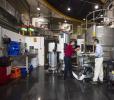
ANSTO offers a diverse range of career opportunities within science, engineering, corporate services and trade disciplines.
Australian scientists from ANTSO have congratulated their British colleagues for a major advance in their quest to develop practical nuclear fusion.
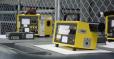
ANSTO offers reliable and traceable calibration services for radiation survey meters, contamination monitors and electronic personal dosimeters.

ANSTO researchers are investigating nuclear propulsion systems for applications on the sea and in space.
Using neutron imaging techniques at ANSTO, researchers from Macquarie University have gained a better understanding of how corrosion forms and spreads through concrete that is commonly used in sewer pipes.

ANSTO provides a summary of waste production and consumables for FY2024 - FY2025

The SAAFE Program supports early career researchers at PhD and Postdoctoral level to expand research and innovation activities within Human Health, the Environment and the Nuclear Fuel Cycle, to initiate sustainable research networks and linkages to support Australia, New Zealand and France research and innovation.
Report to the independent nuclear regulator, ARPANSA, and the IAEA
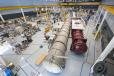
The Australian Centre for Neutron Scattering (ACNS) is a major research facility for neutron science that comprises a suite of neutron instruments with a range of techniques for scientific investigations in physics, chemistry, materials science, medicine and environmental science among other fields.

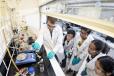
Winners of the Big Ideas Competition 2021
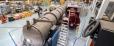
ANSTO’s Lucas Heights campus has an extensive range of specialised facilities and capabilities that are available to assist industry-based professionals in solving problems. Please contact us to discuss how we can assist you. We are open to entering into commercial arrangement with appropriate partners.
ANSTO is part of a contingent showcasing Australian science at the Australian Pavilion at the World Expo Osaka in October.
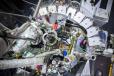
At ACNS we currently have 13 instruments in our user program, which use a variety of scattering techniques to probe materials over a range of length scales.
Using the theory of compressed sensing technology, a team of physicists and scientists invented and developed the CORIS360® platform imaging technology. Compressed sensing imaging can generate an image with far fewer samples compared with traditional imaging techniques.