

Showing 81 - 100 of 261 results
Plans to safely manage medical and research waste
ANSTO will make an application to the independent nuclear regulator, ARPANSA, to vary its license for its Interim Waste Store. The original operating license was approved in 2015, enabling the facility to hold what is called a TN-81 cask of intermediate-level radioactive waste that was safely repatriated from France in 2015.
TSPO: Ancient gene ignites potential for drug development
Groundwater study
Using isotopes to understand saltwater intrusion of Rottnest Island groundwater
Using marine fossils, a large international collaboration decodes a fundamental process in Earth's history
ANSTO has contributed to a large international study which decodes a fundamental process in Earth’s history and provides guidelines regarding the types of research questions that palaeontologists can investigate using marine fossils.
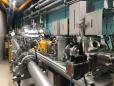
Medium Energy X-ray Absorption Spectroscopy Beamline (MEX-1 and MEX-2)
The Medium Energy- X-ray Absorption Spectroscopy beamlines provides access to XANES and EXAFS data from a bending magnet source, optimised for cutting-edge applications in biological, agricultural and environmental science in an energy range that is not currently available at the Australia Synchrotron.

Highlights - Aerosol Sampling
ANSTO has been tracking and publishing data on fine particle pollution from key sites around Australia, and internationally, for more than 20 years.
Decommissioning Support
Work with our scientists to deliver the best possible decommissioning outcome for your organisation.

The Australian Synchrotron
A world-class national research facility that uses accelerator technology to produce a powerful source of light-X rays and infrared radiation a million times brighter than the sun.
ANSTO part of new network to transform Australia into world-leading space centre
ANSTO is a partner on the National Space Qualification Network (NSQN) led by the Australian National University (ANU) that will transform Australia into a world-leading space centre by enhancing facilities to test payloads, components, and hardware prior to their use in harsh environments of space.
Helping to support the environmental future of Antarctica
The start of ANSTO’s research to support the Securing Antarctica’s Environmental Future (SAEF) program commenced with the official launch of the program and the departure of two students from Queensland University of Technology (QUT), who are affiliated with ANSTO to Antarctica’s Macquarie Island for six months to collect environmental samples as part of the (SAEF) program.
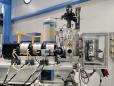
High-energy Heavy Ion Microbeam
The high-energy heavy-ion microprobe is used for the characterisation or modification of material properties at depths from approximately 1 micrometre to maximum depths of up to 500 micrometres from the material surface.
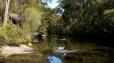
Water research
ANSTO undertakes research on Australia's water resources to inform more sustainable water management practices.

Leader, Nuclear Stewardship
Role at ANSTO

Connect with ANSTO's Women in STEM
Read about an ANSTO scientist and their work to prepare for a school project or interview.
ANSTO technology and expertise heading to Antarctica for atmosphere studies

Ion Radiation biology
In space, without the protection of the magnetosphere, the type and dose of radiation is considerably different to what is naturally experienced on earth.
Australia's bushfire crisis linked to colonial land use change
A new study has found that forest expansion and thickening after British colonisation has created landscapes more prone to burning, amplifying the influence of climate change and propelling Australia’s bushfire crisis.
Principal Research Scientist, Project Leader
Role at ANSTO
Food labels can get mixed up but atoms don’t lie
ANSTO's unique capabilities are being used to develop a quick analytical tool to determine the geographic origin of seafood and authenticates quality.