
Taipan - Thermal Triple Axis Spectrometer
Taipan is used to study the collective motion of atoms, phonons and magnons in materials, and phase transitions and processes involving thermal energy.


Showing 1661 - 1680 of 1705 results
Taipan is used to study the collective motion of atoms, phonons and magnons in materials, and phase transitions and processes involving thermal energy.

ANSTO's Sydney locations are home to the Open Pool Australian Light-water (OPAL) multi-purpose reactor, the Centre for Accelerator Science (CAS), the Australian Centre for Neutron Scattering, the National Research Cyclotron and the National Deuteration Facility.


Dr.


Melanie Calleja is passionate and enthusiastic about spreading the design thinking mindset to many people from a wide range of disciplines to help people ask better questions and think more creatively.
Thirty years of ANSTO's unique capability in monitoring fine particle pollution provides insight on bushfire smoke.
Primary students across Australia were invited to create a public awareness poster for a threatened shorebird found in Australia for our 2020 Shorebirds Competition. In response to COVID-19, and the changes to children’s learning environments, we opened the competition early and also included categories for individual children to enter, as well as school children.


Sherry entered university, torn between the allure of science and the hands-on practicality of engineering. This lead her into the field of Material Science and Engineering.

Nuclear security experts and officials from Australia’s nuclear agencies have convened at the International Atomic Energy Agency’s (IAEA) headquarters in Vienna, Austria last week for the International Conference on Nuclear Security (ICONS).
Australian clean energy technology company, entX Limited is taking advantage of ANSTO’s unique capacity to generate tailored radioisotope products in the OPAL multi-purpose nuclear reactor to advance a series of innovative projects.
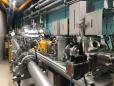
The Medium Energy- X-ray Absorption Spectroscopy beamlines will provide access to XANES and EXAFS data from a bending magnet source, optimised for cutting-edge applications in biological, agricultural and environmental science in an energy range that is not currently available at the Australia Synchrotron.


Dr Klaus Wilcken is an accelerator mass spectrometry scientist at the Centre for Accelerator Science (CAS) with over 12 years of experience with suite of AMS isotopes & techniques.

Publications and resources from the Powder Diffraction beamline.