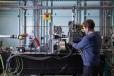
Data analysis - XFM beamline
Data analysis on the X-ray fluorescence microscopy beamline at the Australian Synchrotron.


Showing 181 - 200 of 261 results
Data analysis on the X-ray fluorescence microscopy beamline at the Australian Synchrotron.
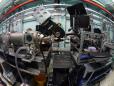
Technical information on the SAXS / WAXS beamline at the Australian Synchrotron.

Think Science! 2023 Summary and Results
The independent nuclear regulator, ARPANSA, is currently accepting submissions about ANSTO’s planned $59.8 million Intermediate Level Solid Waste Storage Facility.
A number of sophisticated non-invasive nuclear and accelerator techniques were used to provide information about the origin and age of an Australian Aboriginal knife held in the collection of the Powerhouse Museum.

ANSTO works in partnerships and collaborative ventures with national and international organisations. Partner with ANSTO.
Research represents significant step towards developing vaccine
This joint initiative at ANSTO has developed a new capability: solid surface radiolabelling to evaluate Auger emitting sources for next-generation targeted therapy.
Think Science! 2023 Summary and Results

This COVIDSafe Plan describes the actions that ANSTO will take to keep our staff, contractors and visitors safe and minimise the risk of the spread of COVID-19 infection.
Strategic partnership with the University of Sydney expanded to continue a long history of research collaboration.

In space, without the protection of the magnetosphere, the type and dose of radiation is considerably different to what is naturally experienced on earth. However, it is the secondary particles of lower energies created when galactic and cosmic radiation interacts with shielding that is of concern for astronauts.

In collaboration with the French National Institute of Health and Medical Research (INSERM) and the French International Space Agency (CNES), ANSTO scientists are undertaking research on the radiobiological effects of secondary particles that are created when radiation interacts with the shielding on the International Space Station.
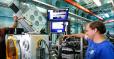
Beamtime guide on the SAX / WAXS beamline at the Australian Synchrotron.
Highlighted at radiation protection congress

Your students can analyse real research data from ANSTO scientists.
International palaeontologists have used advanced imaging techniques at ANSTO’S Australian Synchrotron to clarify the role that the earliest fruit-eating birds of the Cretaceous period may have had in helping fruit-producing plants to evolve.
Neutron scattering instruments used by Japanese researchers.