ANSTO is helping construct Australia’s first dark matter lab
Launch of the second phase of construction of the underground laboratory to detect dark matter.


Showing 261 - 280 of 554 results
Launch of the second phase of construction of the underground laboratory to detect dark matter.
Two early career nuclear scientists who received international scholarships have spent time in the Nuclear Fuel Cycle group at ANSTO are making progress on their work to improve nuclear fuel.

ANSTO researchers are investigating nuclear propulsion systems for applications on the sea and in space.

The Think Science! event encourages students to engage with the Science Inquiry Skills process as outlined in the Australian National Curriculum.
The most important data from NASA’s first crewed Artemis mission may not be its photographs, but the radiation measurements that will shape how humans work and survive beyond travel farther from Earth’s magnetic shelter safely.
Research will change understanding of Australian Aboriginal rock art found in rock shelters of the Kimberley and its relationship to a changing landscape
With all excavation completed and rock removed from the underground site, the physics lab will now be built within the caverns of the Stawell Mines site.
A collaboration of scientists from RMIT, ANSTO and the CSIRO has published pioneering research that brings new insights into intrinsically disordered proteins and protein regions (IDPs)/ (IDRs) and how they behave under various physiological processes.
ANSTO has a role in the global monitoring system on behalf of Australia to ensure non-proliferation of weapons and that nuclear technology is only used for peaceful purposes.
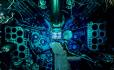
Radiation can be described as energy or particles from a source that travel through space or other mediums. Light, heat, and wireless communications are all forms of radiation.
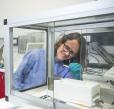
The Australian Nuclear Medicine Traceability Program (ANMTP) assists practices administering nuclear medicine-based radionuclides to achieve regulatory compliance by providing measurement traceability to the Australian Standard.
Commitment to undertake health research.

ANSTO's procurement policy is closely aligned with the Commonwealth Procurement Guidelines and makes use of the Australian National Audit Office guidelines on ethics, accountability and transparency.
The health impacts of exposure to poor levels of air quality resulting from bushfires and drought recommended that NSW Government work with ANSTO to expand the sampling of particulate matter in the air state-wide.
Atomic structure of new cathode material for sodium ion batteries helps explain long life
The installation of a cold neutron source (CNS), a component that reduces the energy and speed of the neutrons from a research reactor for use in scientific instruments, was successfully completed in September 2024.