

Showing 401 - 420 of 434 results
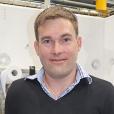
Neutron Reflectometry Instrument Scientist
Role at ANSTO
ANSTO is the new production partner of OncoBeta® GmbH in Australia
Innovative medical device Rhenium-SCT® therapy for non-melanoma skin cancer is now available in Australia
New technique to improve global climate models
An investigation that set out to resolve some of the uncertainty in the sources and quantities of pollutants reaching Antarctica has produced a new experimental technique to identify and characterise recently terrestrially-influenced air reaching Antarctica.
Celebrating Australian women in nuclear
Highlighting the contribution of four inspirational ANSTO leaders on International Women's Day.
Expertise in characterising materials for lithium ion batteries
Pioneering work on materials for energy production, such as lithium ion batteries, has made ANSTO a centre of specialist capabilities and expertise.

Accommodation, Meals and Transport NRS2025
Chasing ghosts at the Australian Centre for Neutron Scattering
Neutron and gamma ghost imaging are important scientific developments reported in two publications, and the subject of an Australian Research Council Discovery Project grant awarded to a team that includes ANSTO scientists

Update: Regional Cooperative Agreement (RCA) Cooperative Projects (Asia and Pacific)
ANSTO is coordinating and facilitating the calling of pre-concept papers for the next cycle of technical cooperative project proposals under the Regional Cooperative Agreement for Research, Development and Training Related to Nuclear Science and Technology for Asia and the Pacific (RCA) | IAEA
Australian led cancer project making an impact at its first regional training course in Malaysia
The Australian led regional cancer care project in medical physics held its first regional training course in Malaysia to progress Rays of Hope.
The best behind the neutron beam: Awards announced
Four annual awards in neutron scattering were announced at Australian Neutron Beam Users Group (ANBUG) and AINSE Neutron Scattering Symposium (AANSS) to individuals with strong links to ANSTO
Research to extend aircraft fatigue life
Bringing radiochemistry to life
ANSTO co-developed technology LieNa® receives funding boost in a win for Australia’s lithium and critical minerals industry
A world-first processing technology developed in collaboration by ANSTO’s Minerals unit.
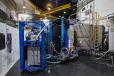
Services - Taipan
Sample environments, Data analysis, SpICE and SICS
Champions are accelerating progress in the empowerment of women
Nuclear techniques reveal ‘tunability' of membranes for enhanced electrical conductivity in graphene
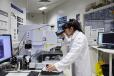
Infrared microspectroscopy
The Infrared Microspectroscopy beamline combines the high brilliance and collimation of the synchrotron beam through a Bruker V80v Fourier Transform Infrared (FTIR) spectrometer and into a Hyperion 3000 IR microscope to reach high signal-to-noise ratios at diffraction limited spatial resolutions between 3-8 μm.