Highlights - Aerosol Sampling
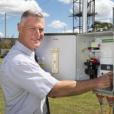
ANSTO has been tracking and publishing data on fine particle pollution from key sites around Australia, and internationally, for more than 20 years.


Showing 61 - 80 of 207 results
ANSTO has been tracking and publishing data on fine particle pollution from key sites around Australia, and internationally, for more than 20 years.

Historic memorandums of understanding on the peaceful use of nuclear with Thailand and Canada.
ANSTO's unique capabilities are being used to develop a quick analytical tool to determine the geographic origin of seafood and authenticates quality.
ANSTO facilitating coordinated effort to find the nexus that leads to chronic kidney disease of unknown origin

Participants undertook IAEA training hosted by Macquarie University and ANSTO on use of radionuclides for soil and water investigations.

John is currently one of two co-Directors of the Health Research and Technology Group at ANSTO.
He is Director of the ANSTO node of the NCRIS National Imaging Facility and is a member of the NIF Scientific Advisory Committee.
His Excellency General the Honourable David Hurley AC DSC (Retd), Governor-General of the Commonwealth of Australia and Her Excellency Mrs Linda Hurley visited ANSTO’s Innovation Centre nandin and several facilities including the OPAL multipurpose reactor this week for a tour after learning of the ANSTO-nandin win in the NASA SpaceApps COVID 19 Challenge.
A large collaboration of Australian and New Zealand researchers has established that a thin film technology can be used to monitor stormwater effectively and provides a way to translate the presence of metal contaminants into potential risks to aquatic ecosystems.
ANSTO contributes to major study on global warming by measuring methane and carbon monoxide trapped in ice.
A cross-disciplinary team has used laboratory-based and synchrotron-based infrared spectroscopy imaging techniques to monitor the waxy surface of living plant leaves in real-time to gain insights into plant physiology in response to disease, biological changes or environmental stress.

Nuclear techniques used in investigation of a new class of micro and nanoscale zinc fertilisers.