
Highlights - Cultural Heritage
Over the last decades, neutron, photon, and ion beams have been established as an innovative and attractive investigative approach to characterise cultural-heritage materials.


Showing 1 - 20 of 20 results
Over the last decades, neutron, photon, and ion beams have been established as an innovative and attractive investigative approach to characterise cultural-heritage materials.

ANSTO has been tracking and publishing data on fine particle pollution from key sites around Australia, and internationally, for more than 20 years.

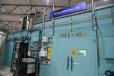
Publications and resources from the Powder Diffraction beamline.

Highlights of the Energy Materials Project.
On average, there is now 17 per cent less rainfall across Western Australia’s south-western region than was recorded prior to 1970. This rainfall reduction has economic, social and environmental implications for the region, in particular for the growing capital of Perth, as well as water-dependent industries in the state.

Publications, posters and conference presentations for fire impacts reconstructed from a southwest Australian stalagmite.

The Infrared microspectroscopy microscopes can record spectra from a range of different samples; from thin microtomed sections to polished blocks and embedded particles. This section highlights the types of samples that can be analysed using the IRM beamline

Guidance for obtaining and maintaining human or animal ethics approval at the Australian Synchrotron.
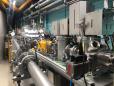
The Medium Energy- X-ray Absorption Spectroscopy beamlines provides access to XANES and EXAFS data from a bending magnet source, optimised for cutting-edge applications in biological, agricultural and environmental science in an energy range that is not currently available at the Australia Synchrotron.
In January 2026, Mr Michael Quigley AM, ANSTO Board Chair, shared ANSTO's Statement of Intent with the Minister for Industry and Innovation, and Minister for Science.
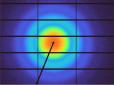
The Biological Small Angle X-ray Scattering beamline will be optimised for measuring small angle scattering of surfactants, nanoparticles, polymers, lipids, proteins and other biological macromolecules in solution. BioSAXS combines combine a state-of-the-art high-flux small angle scattering beamline with specialised in-line protein purification and preparation techniques for high-throughput protein analysis.
Australian researchers and clinicians have recently returned from Japan where they investigated the use of advanced radiation therapy for cancer using heavy ions at particle therapy facilities on a study tour .

The Advanced Diffraction and Scattering beamlines (ADS-1 and ADS-2) are two independently operating, experimentally flexible beamlines that will use high-energy X-ray diffraction and imaging to characterise the structures of new materials and minerals.
See details of previously published customer updates from our Health products team.
Recent catastrophic Australian bushfires produced extremely high levels of fine particle pollution.
Highlighting the contribution of four inspirational ANSTO leaders on International Women's Day.
Radiation can be described as energy or particles from a source that travel through space or other mediums. Light, heat, and wireless communications are all forms of radiation.