Principal Research Scientist


Showing 1461 - 1480 of 1651 results

Role at ANSTO

Role at ANSTO
Nick is a radiation biologist who works for the NST Human Health research theme.

Role at ANSTO
Dr Richard Mole is an instrument scientist co-responsible for the cold-neutron time-of-flight spectrometer PELICAN.

Dr Storr has worked for over 40 years in nuclear science and technology in a range of positions spanning operations, research and executive management.
New technology is being developed in Sydney to recycle used Personal Protective Equipment (PPE) and turn it into raw materials for 3D printing.
Multi-faceted approach to dating Australian Indigenous rock art from Kimberley region
International interest is building in Australia’s new multi-million-dollar radioactive waste processing facility at the Sydney campus of the Australian Nuclear Science and Technology Organisation (ANSTO).

ANSTO may provide travel and accommodation support to successful grant applicants from AINSE member organisations. Travel funds granted are to be used solely to cover the majority of the cost to travel to Sydney.
The User Advisory Committee (UAC) is an independent group that provides advice to ANSTO Australian Synchrotron (AS) senior management on issues from a user perspective.

The Program Advisory Committees review proposals submitted to a particular beamline at the Australian Synchrotron

Geetanjali helps maintain the laboratories and provides technical support to researchers.
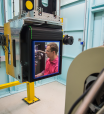
The High Performance Macromolecular Crystallography beamline will enable the study of very small (sub-5 micrometre) or weakly diffracting crystals, providing a state-of-the-art high-throughput facility for researchers. MX3 will be able to study the structures of large proteins and protein complexes for virology, drug design and industrial applications via goniometer mounted crystals, in-tray screening, or via serial crystallography methods.