


Showing 261 - 280 of 774 results
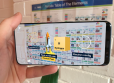
Periodic table photo competition results
This science week ANSTO (August 10th - 18th) is running a classroom competition using the ANSTO Periodic Table and our new ANSTO XR app.
New radiocarbon calibration curves for a better dating method
The technique of using radiocarbon to establish the age of artefacts and other samples as well as to provide insights on climate, has just been updated with the publication of the new radiocarbon curves.
From the frontline: Dating the ancient past in tiny bites
Statement of Intent
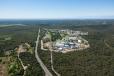
In January 2026, Mr Michael Quigley AM, ANSTO Board Chair, shared ANSTO's Statement of Intent with the Minister for Industry and Innovation, and Minister for Science.
Removal of dangerous contaminants from dirty water
A group from Monash university has sought to make a new innovative nano-porous sieve material which has the potential to be produced on a global scale and is effective for a much longer time.
ANSTO consolidates strong scientific ties with major German scientific organisation, Helmholtz Zentrum Berlin
Studying Western Australian caves to help us understand climate change
On average, there is now 17 per cent less rainfall across Western Australia’s south-western region than was recorded prior to 1970. This rainfall reduction has economic, social and environmental implications for the region, in particular for the growing capital of Perth, as well as water-dependent industries in the state.
Sharing Sydney’s experience with South Australia
ANSTO fights cancer
Commitment to undertake health research.
Little forest legacy site
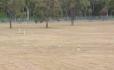
ANSTO is responsible for the Little Forest Legacy Site (LFLS) located within the ANSTO Buffer Zone boundary. This site, formerly known as the Little Forest Burial Ground (LFBG), was used by the Australian Atomic Energy Commission (AAEC) during the 1960’s to dispose of waste containing low levels of radioactivity and beryllium oxide (non-radioactive) in a series of shallow trenches. There has been regular monitoring of the site since 1966 and the results have been reported in ANSTO’s environmental monitoring reports.
How safe is OPAL?
The OPAL research reactor's design and integrated safety features mean it is extremely safe; a fact confirmed by independent analysis.

What are radioisotopes?
Radioisotopes are widely used in medicine, industry, and scientific research. New applications for radioisotopes are constantly being developed.

STEM Career Tours
Discover the many career opportunities in the nuclear industry on a special behind the scenes tour of ANSTO.
Food science: Insight into emulsions
Neutron scattering techniques help characterise the structure of a particle based emulsifier

Innovate Reconciliation Action Plan
In 2023 ANSTO produced its 2nd Innovate Reconciliation Action Plan to guide reconciliation actions.
Sir William Tyree Foundation supports careers in science
Indigenous development program and nuclear science and engineering scholarships will be funded
Approach to Improve additive manufacturing processes developed
Collaborative research predicted the distortion and performance of metal parts made by laser deposition.

What is radiation?
Radiation can be described as energy or particles from a source that travel through space or other mediums. Light, heat, and wireless communications are all forms of radiation.
Peter Lay and Wei Kong Pang recognised by ANSTO for contributions to synchrotron research
Professor Peter Lay from the University of Sydney has been awarded the Australian Synchrotron Lifetime Contribution Award by ANSTO, the Australian Nuclear Science and Technology Organisation.